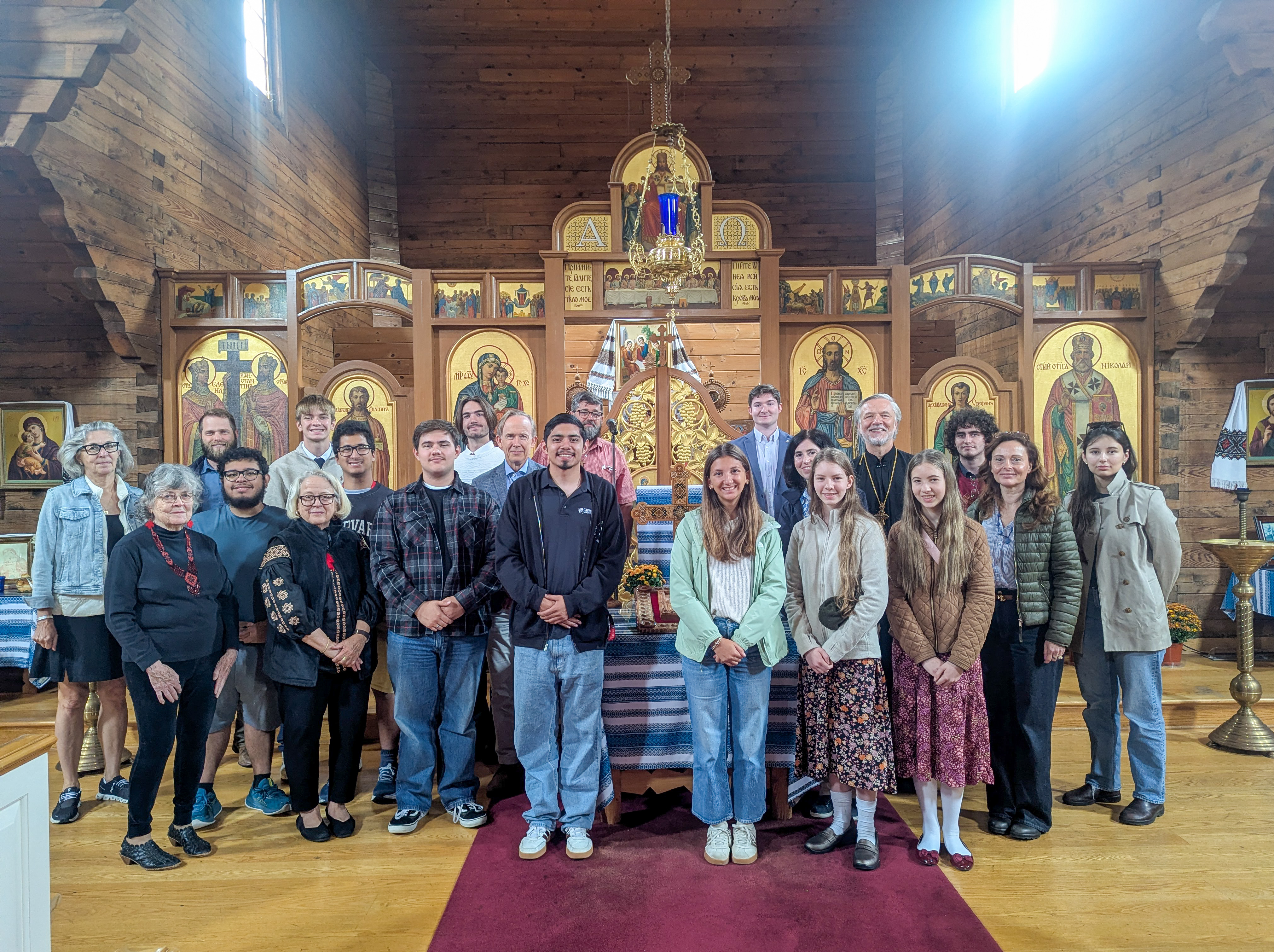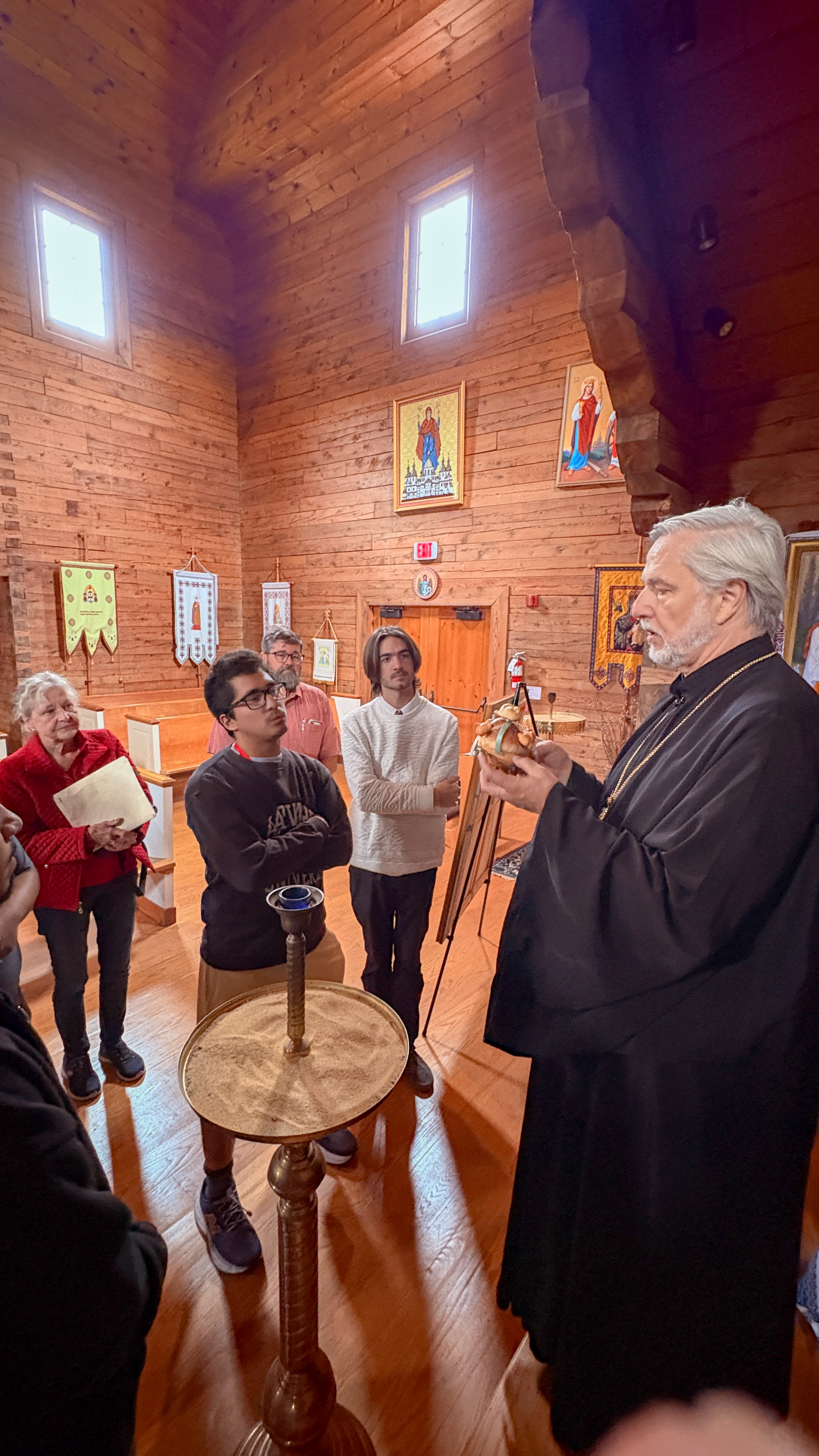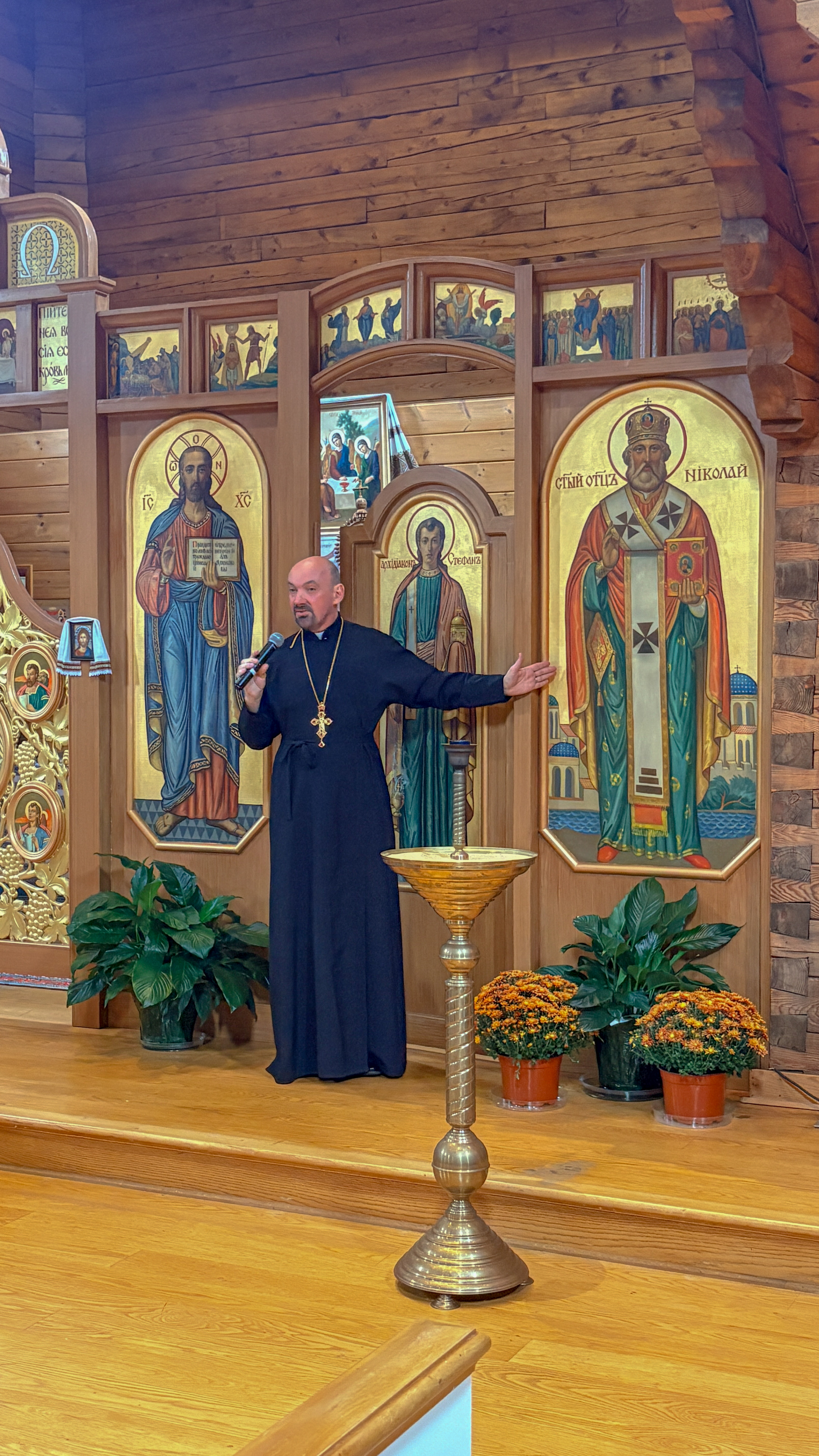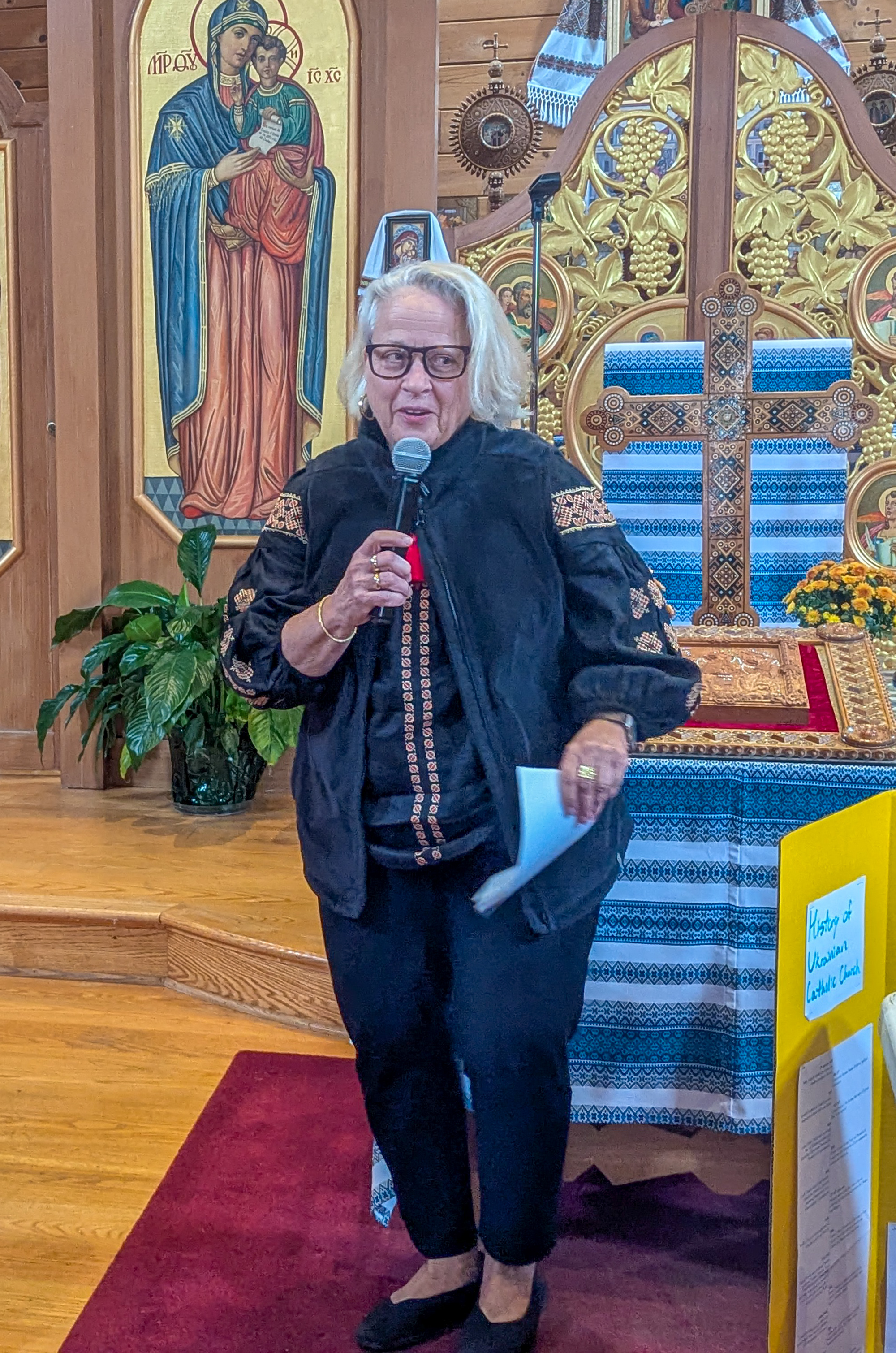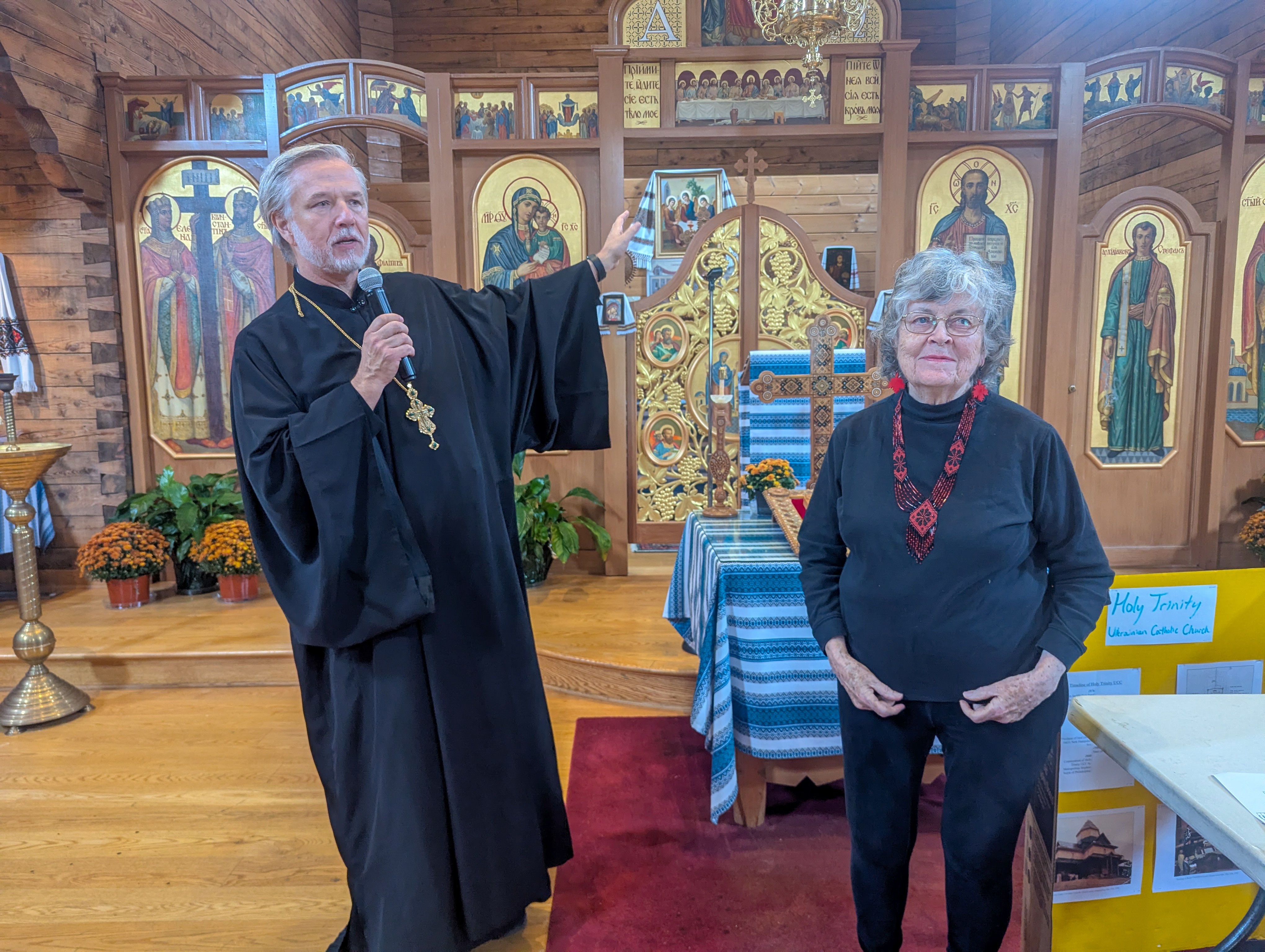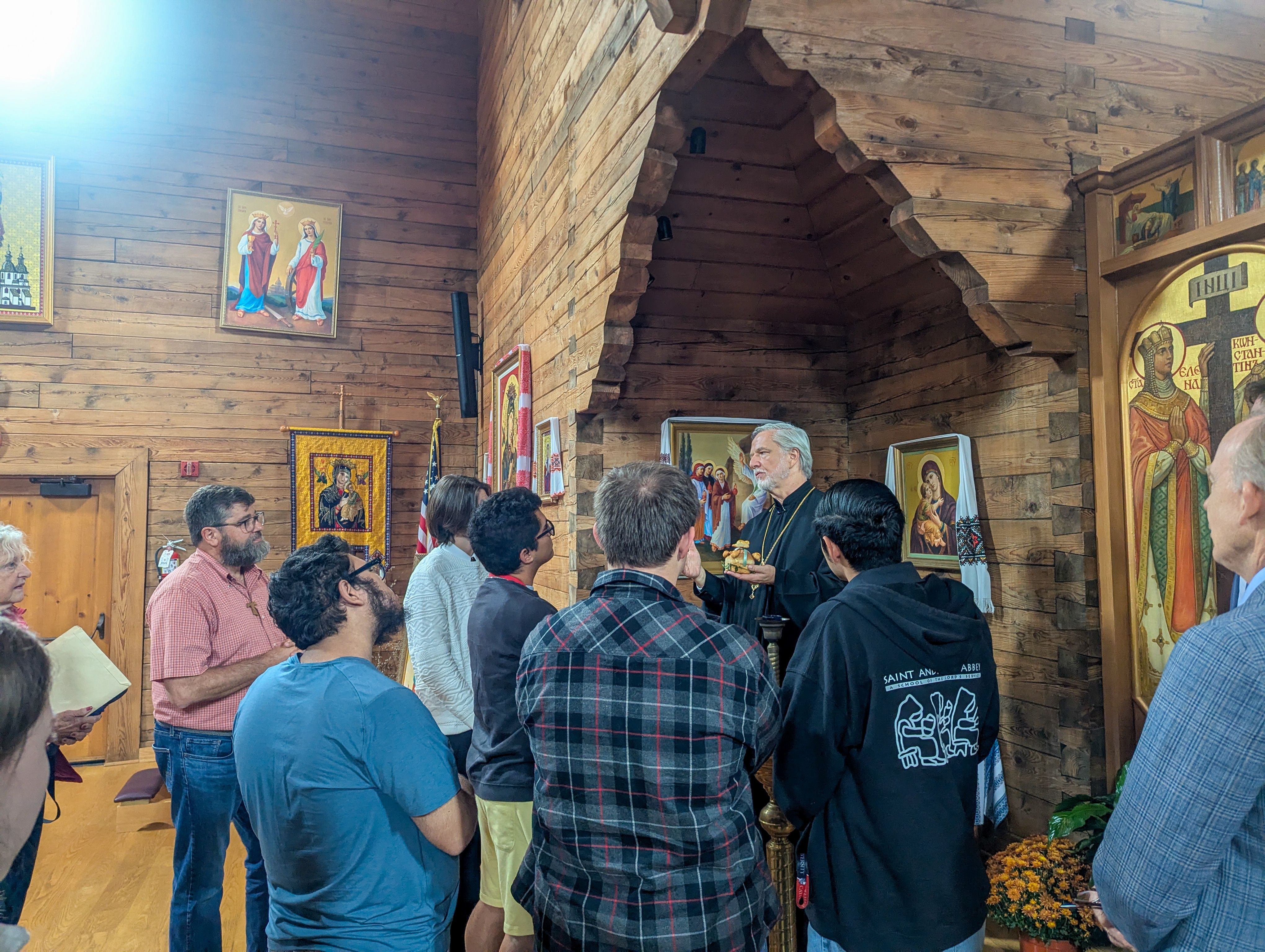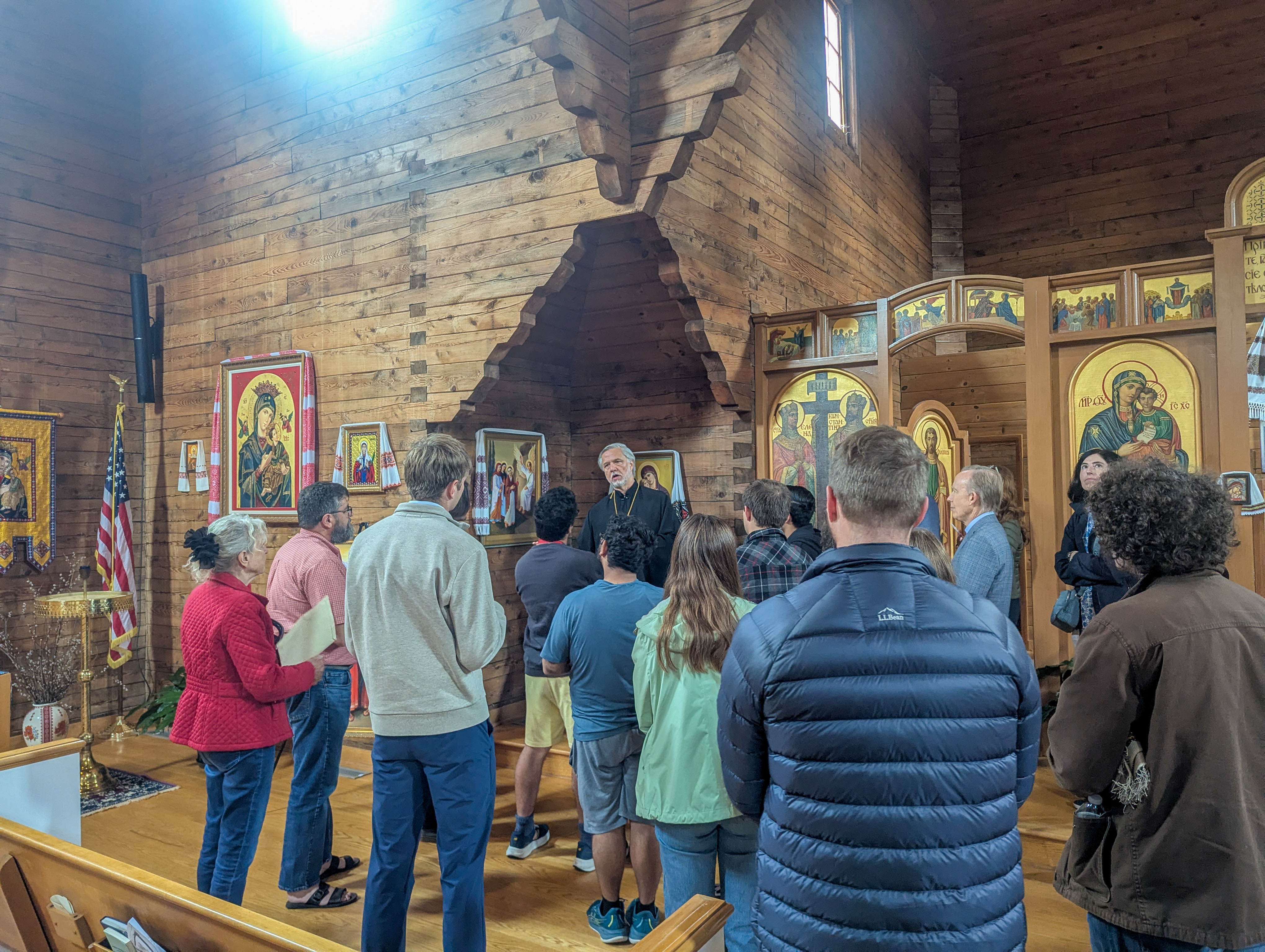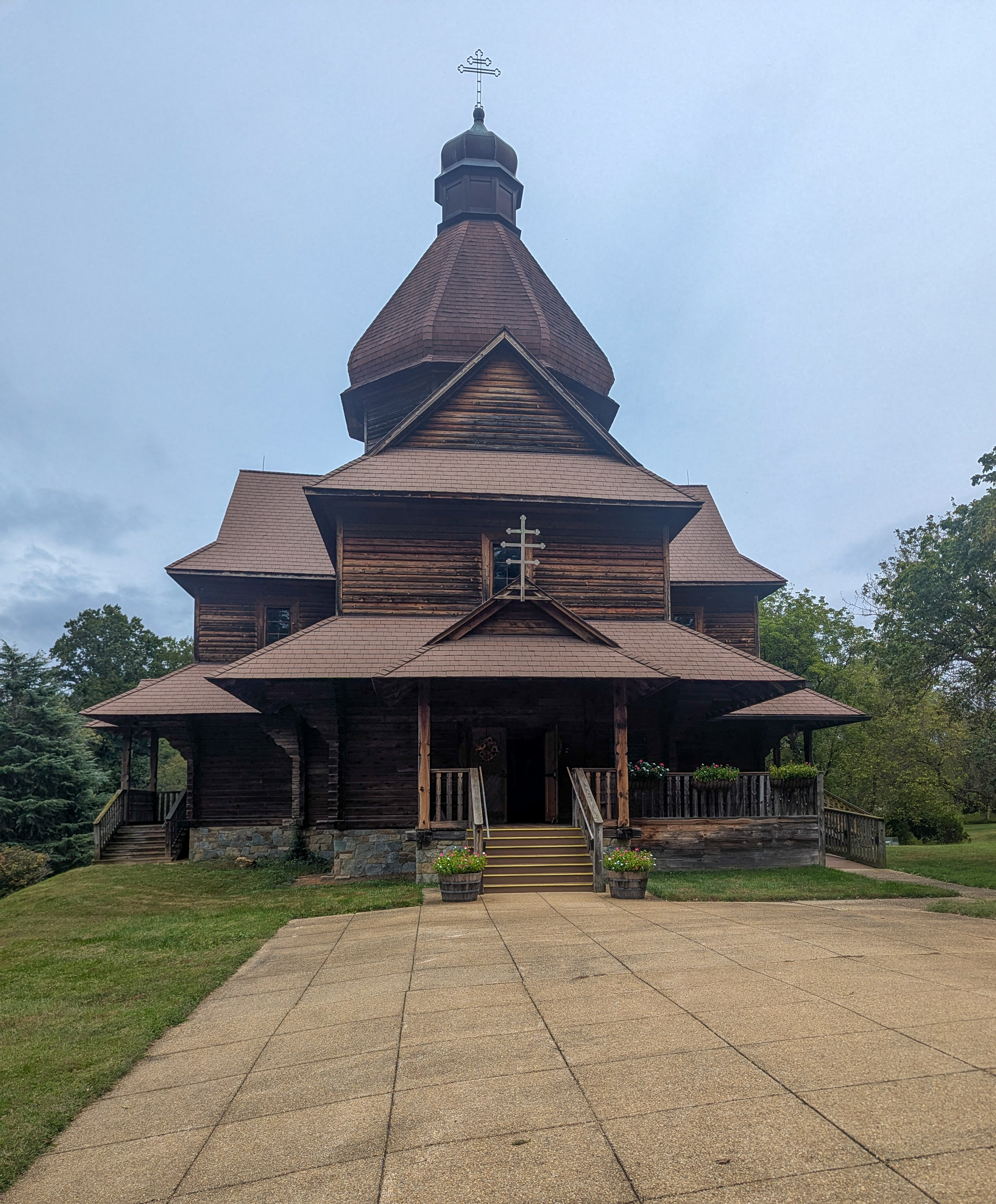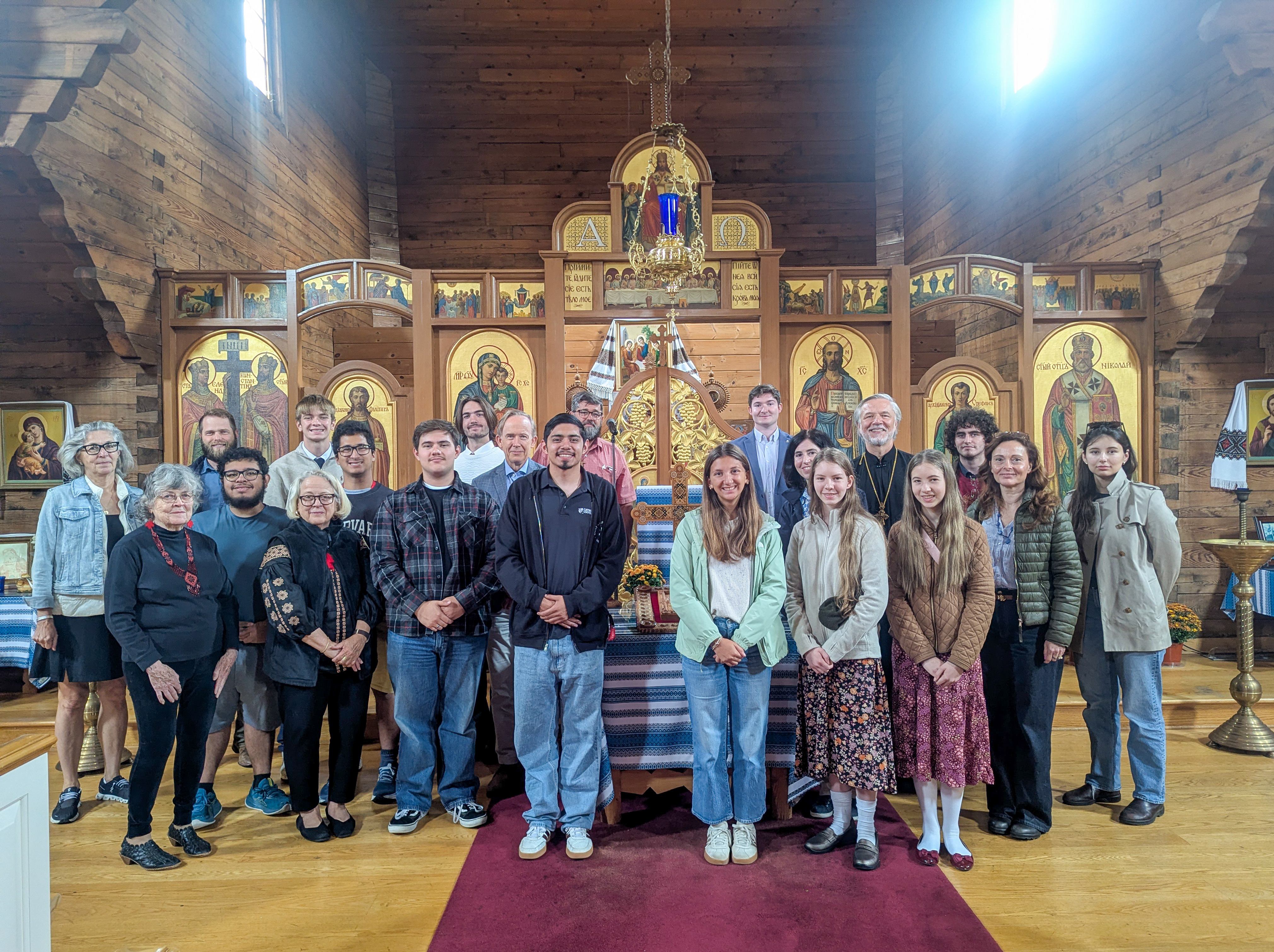
On Saturday, September 26 the Bishop Basil Losten Center for Ukrainian Church Studies at The Catholic University of America brought together more than 30 CUA students, faculty, staff, and guests for a very special visit to Holy Trinity Ukrainian Catholic Church in Silver Spring, Maryland.
The visit offered an in-depth look at the church’s history, theology, architecture, and Ukrainian cultural heritage, while also providing a broader contextualization regarding similar Ukrainian churches worldwide.
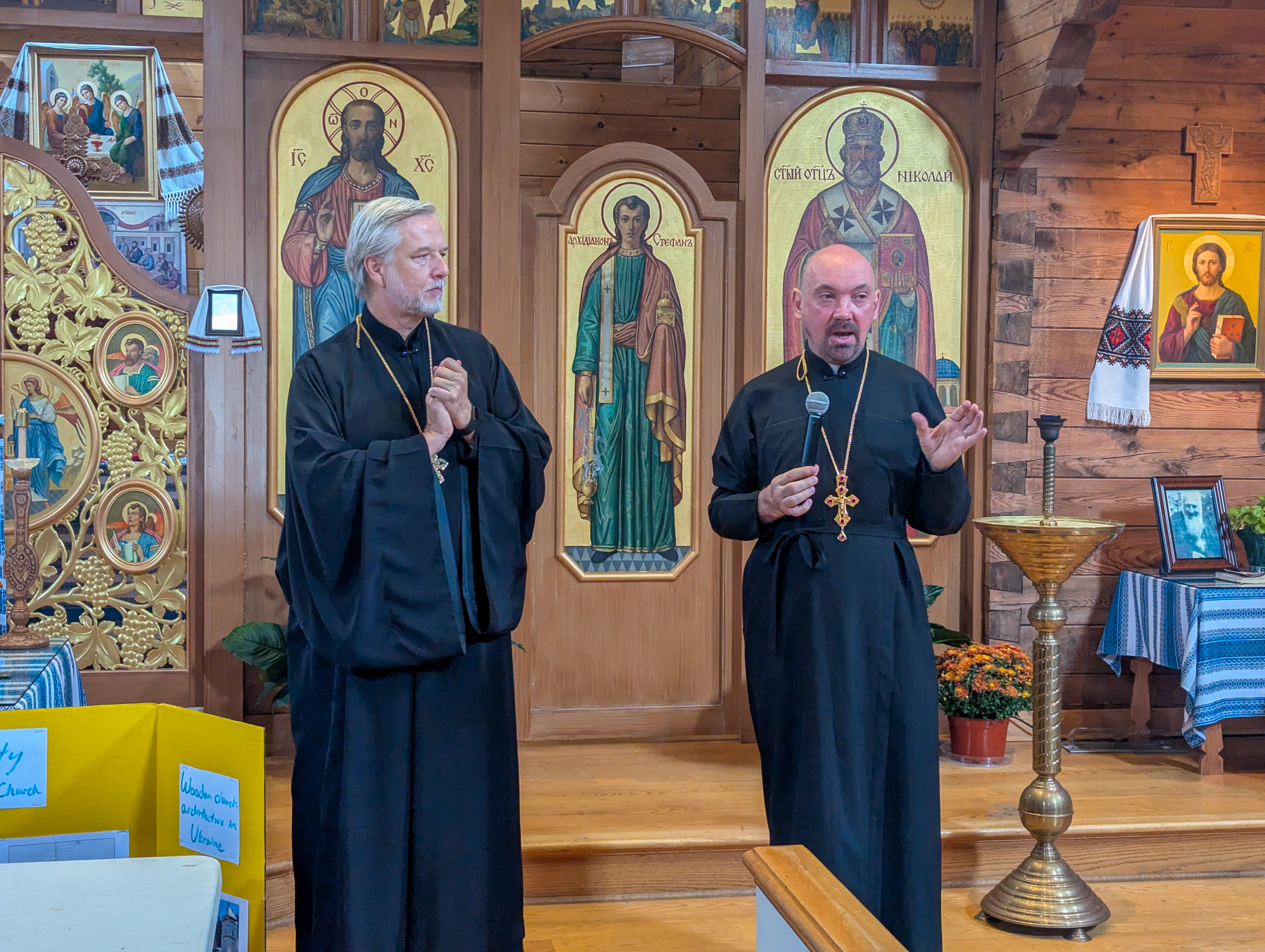
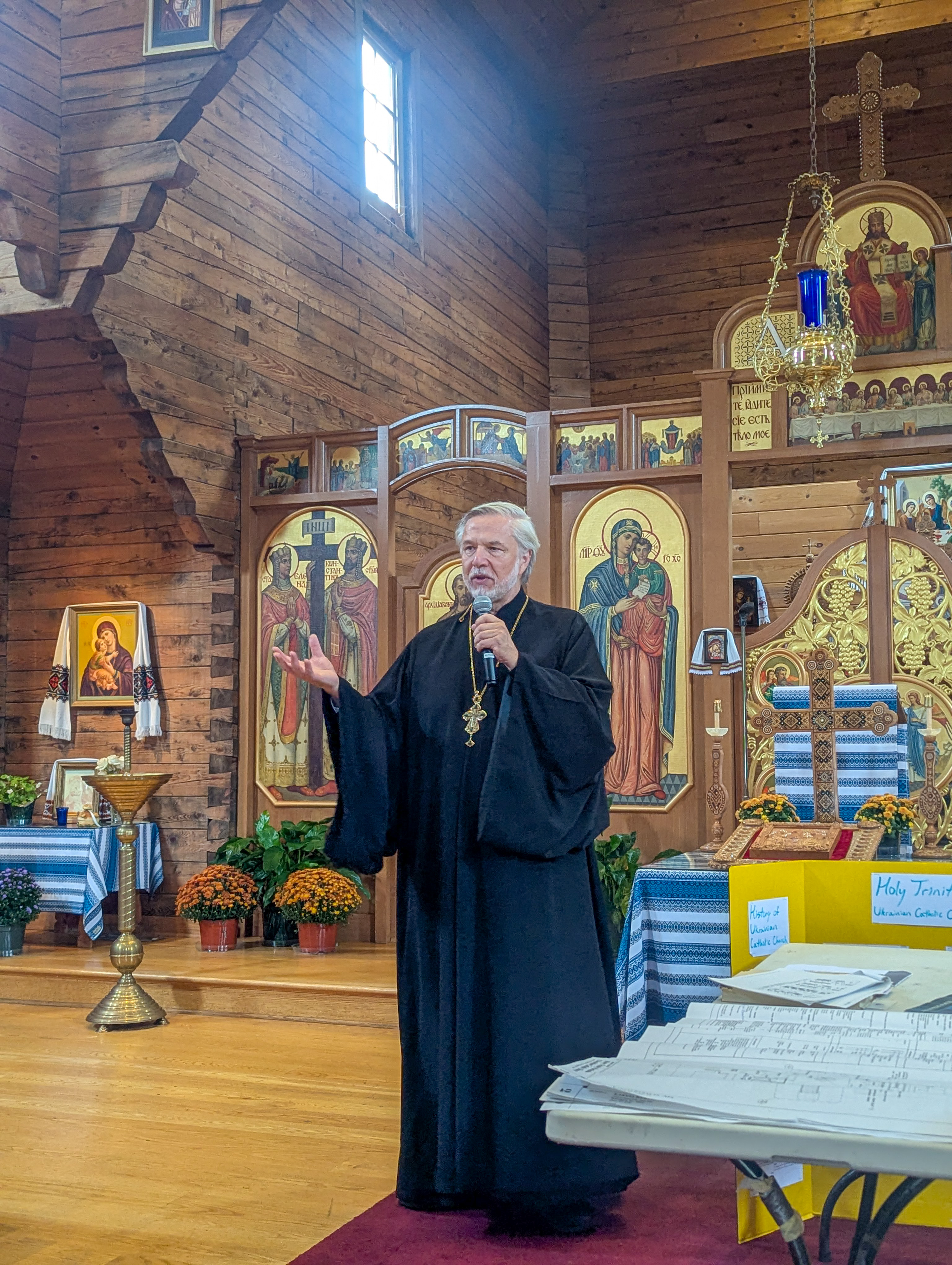
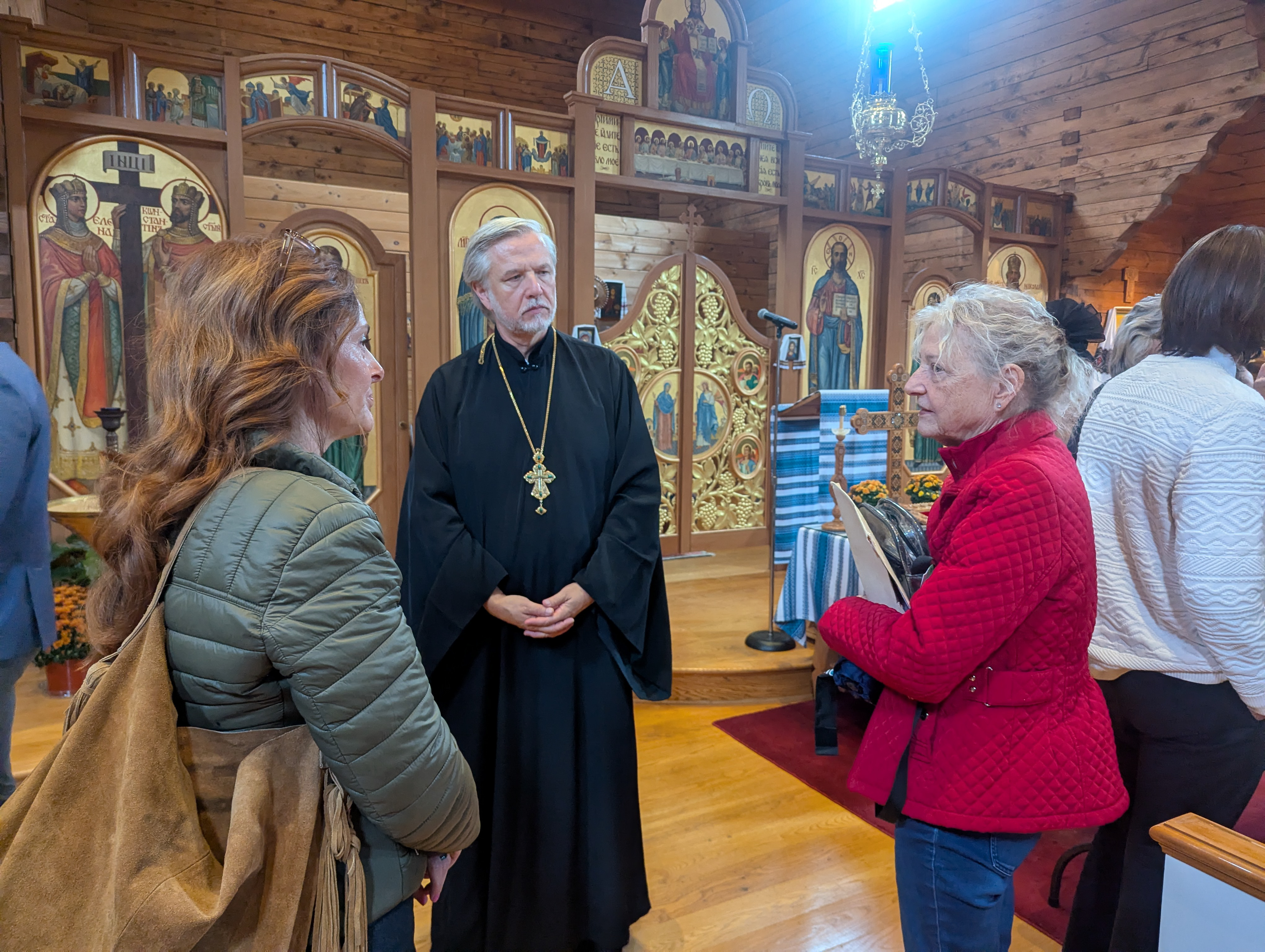
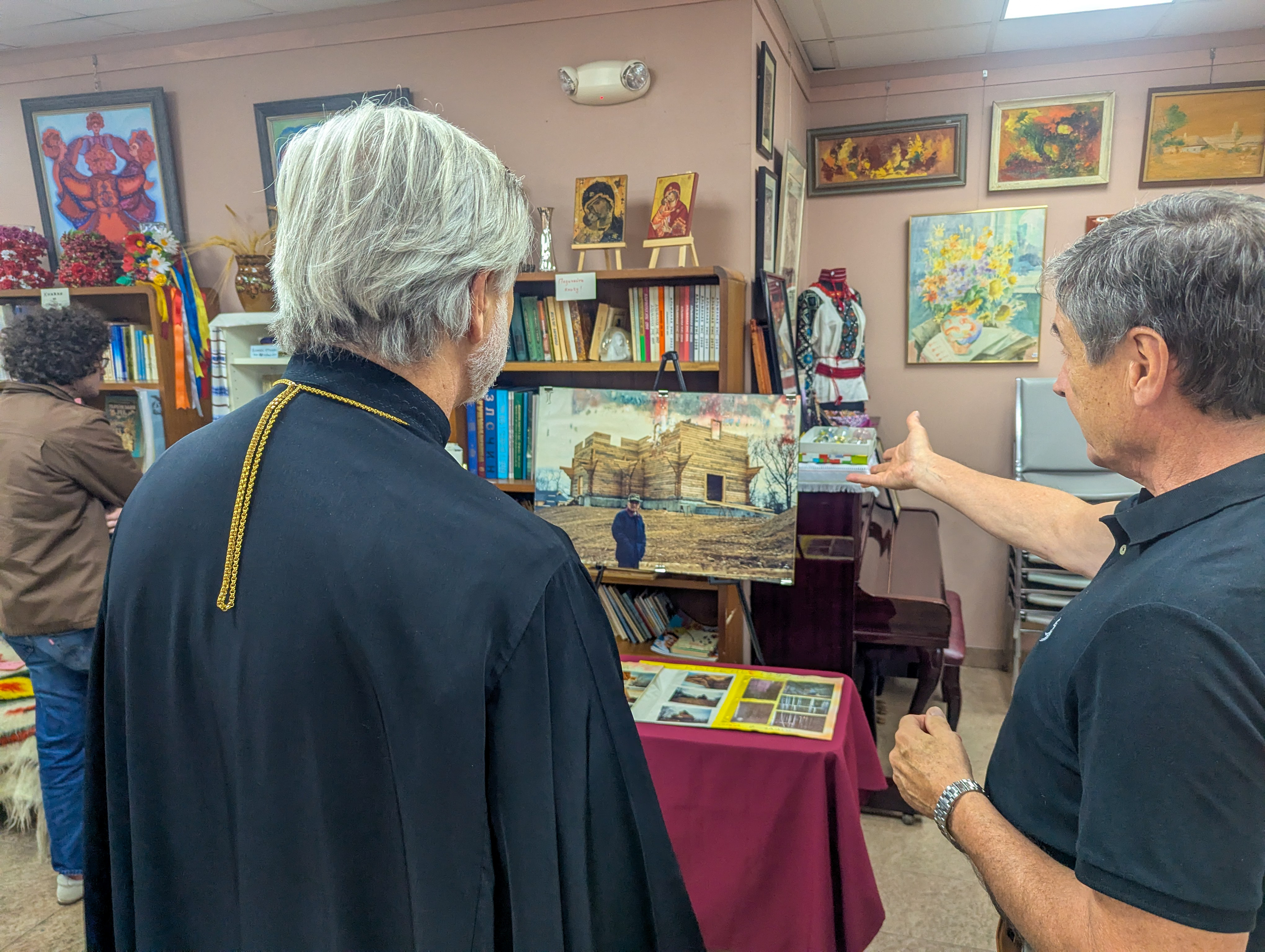
Fr. Olexander Dumenko, pastor of the ornate wooden church, opened the visit with prayer and shared a brief history of the church as well as its remarkable iconostasis. Fr. Mark Morozowich, chair and director of the Center, then broadened the discussion with an overview of the theology and liturgical meaning of the sacred space. Natalia Gawkiak, a parishioner, gave a first hand account of the community’s choice to build this unique wooden church.
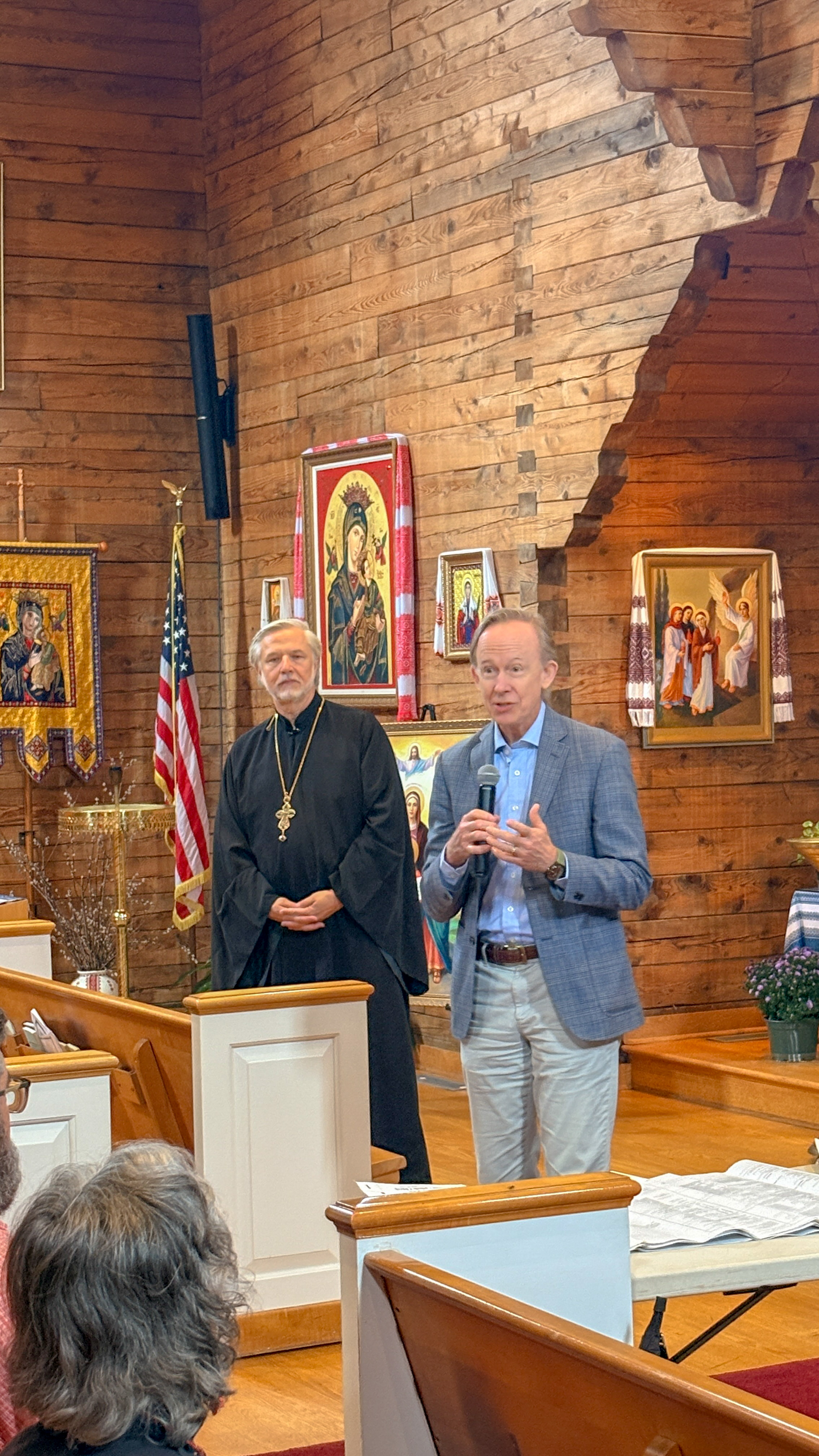
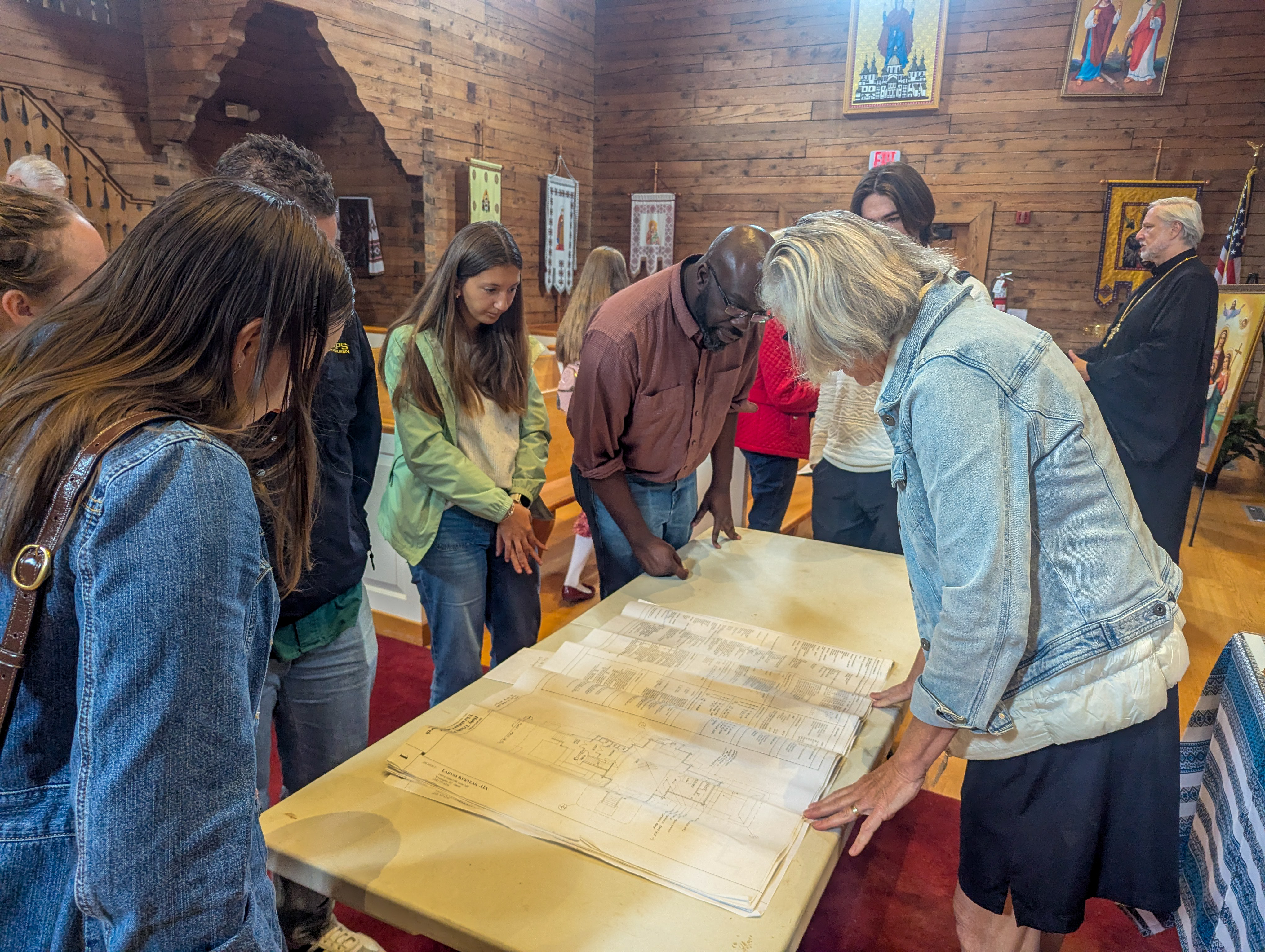
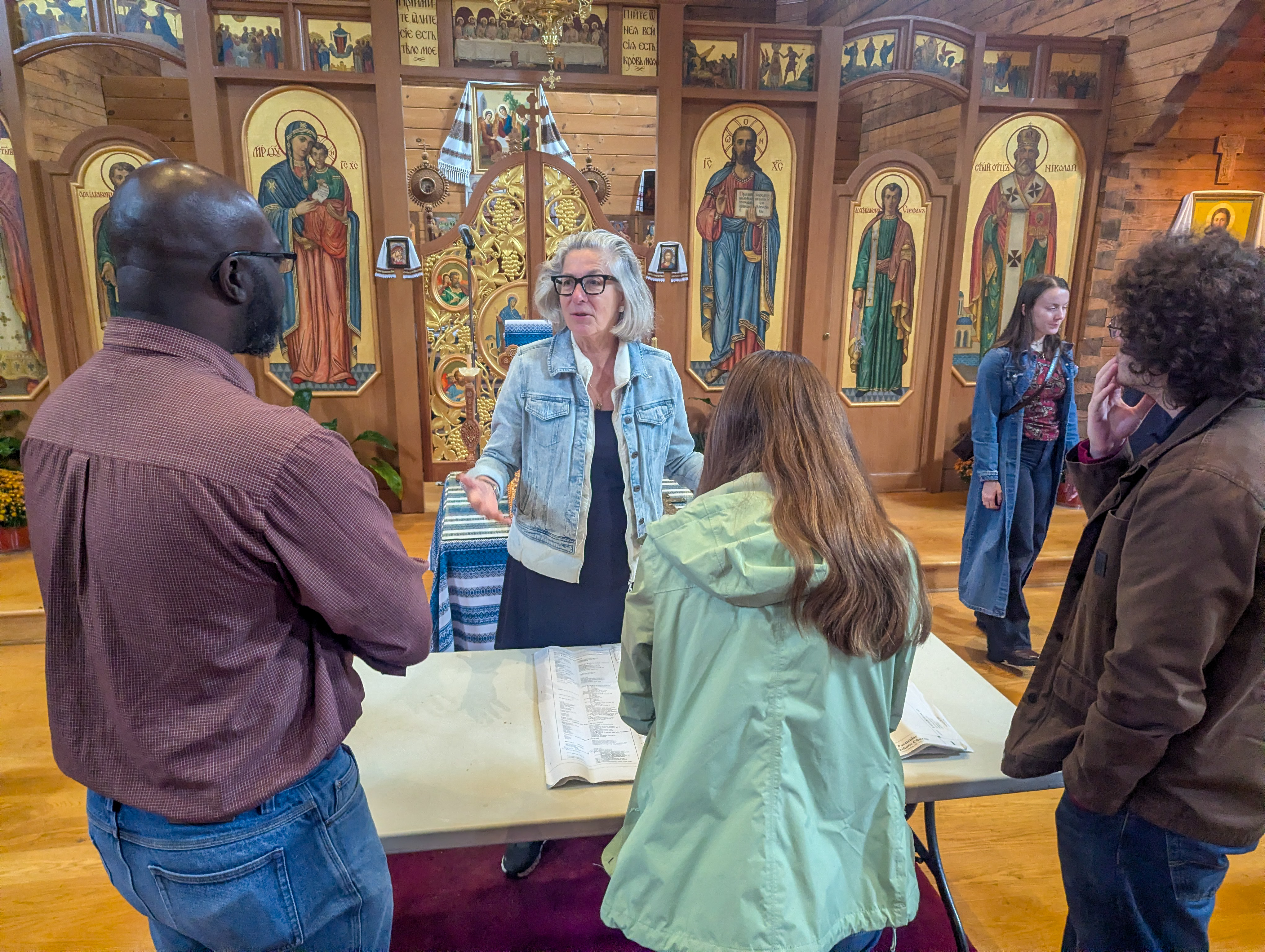
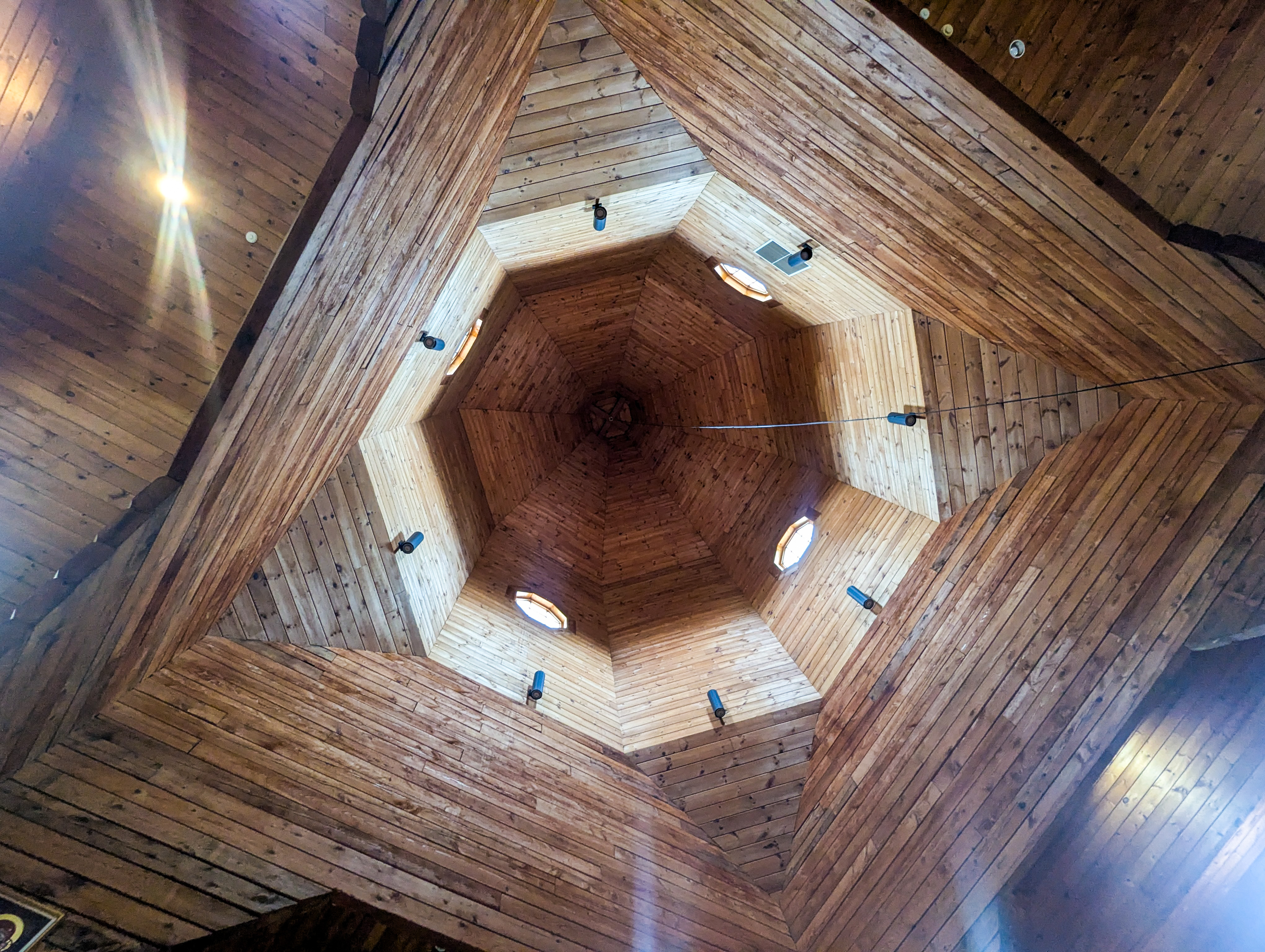
Martha Holder of the Foundation to Preserve Ukraine’s Sacral Arts provided historical context on Ukrainian wooden churches of the 17th and 18th centuries. The keynote speaker, architect Larysa Kurylas presented a fascinating account of the architectural history of the building. She described the process of completing the stalled construction in the 1990s, navigating building-code challenges, and addressing questions surrounding Hutsul and Boyko architectural traditions, as well as the church’s modern elements.
The group then had a technical and architectural walk-through of the exterior, the more modern cement basement, mechanical systems, and roof details, while others engaged in deeper theological discussions.
The visit ended with a lovely luncheon prepared by the parishioner at Holy Trinity. The participants truly enjoyed the fellowship and discussions during the meal. We would like to extend our special thanks to our hosts at the Holy Trinity Church and their spiritual leader, Fr. Dumenko. A special word of thanks to Fr. Morozowich, Larysa Kurylas, Martha Holder, Natalia Gawdiak and everyone who shared their knowledge and welcomed our group. We are grateful for the opportunity to learn from this extraordinary example of Ukrainian sacred architecture—and to experience its living tradition firsthand.